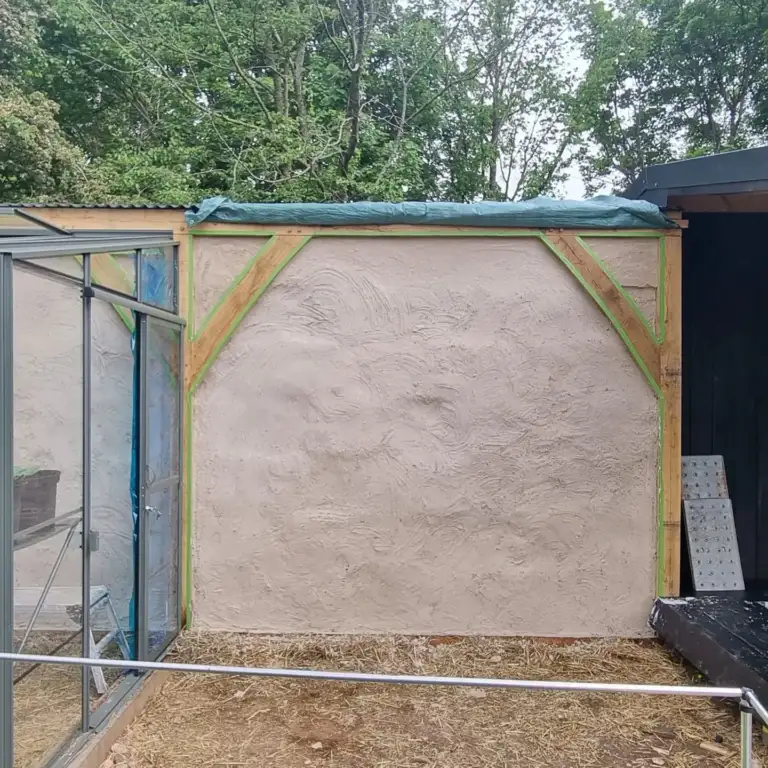
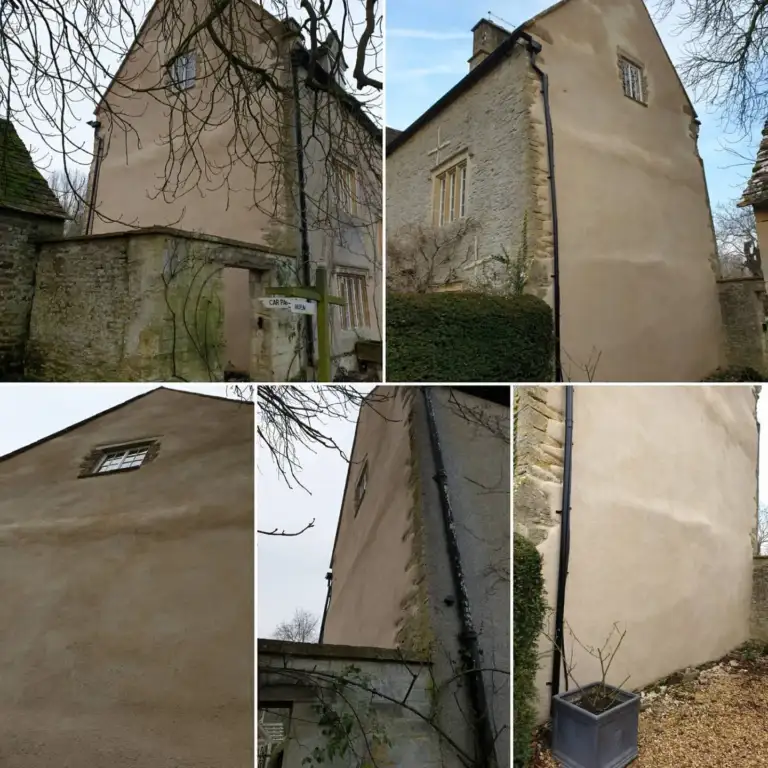
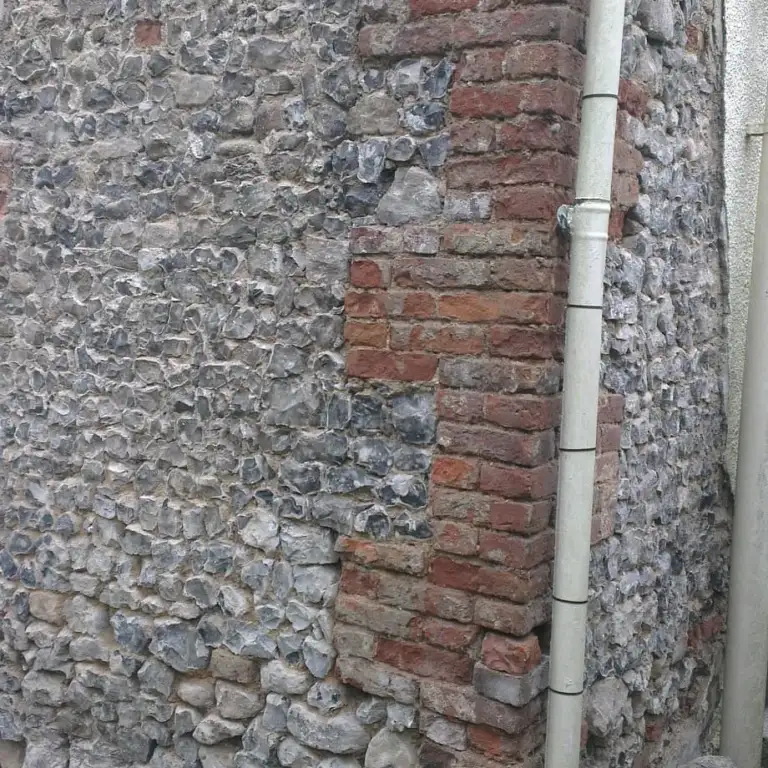
Lime render protects old walls while letting them breathe. It is the traditional finish for rubble stone, cob, chalk and many timber-framed and brick buildings, and it is the answer when cement render has cracked, trapped damp and started to damage the wall behind it.
At Limeway Wiltshire we remove failed cement render and apply lime render by hand, in traditional coats, on houses, cottages and gable ends across Swindon, Wiltshire and the neighbouring counties.
What Is Lime Rendering?
Lime render is a coating of lime and sand, sometimes with added hair or fibre, applied to the outside of a wall in several coats. It sheds most of the rain that hits it, but it is porous, so any moisture that does get into the wall can evaporate back out. It is also slightly flexible, so it copes with the small movements old buildings make through the seasons.
Cement render works the opposite way. It is hard and waterproof on the surface, but it cracks as the building moves, lets water in through the cracks and then stops it drying out. Replacing it with lime is one of the most effective repairs you can make to a damp old building.
Signs Your Render Needs Attention
Cracked, hollow-sounding or bulging cement render
Render coming away from the wall in patches
Damp or mould inside, behind rendered walls
Staining or salts on the surface
Old lime render that has eroded or been patched in cement
How We Lime Render
Removing the old render. Failed or cement render is carefully taken off, and loose material is cleaned from the wall.
Repairing the wall. Masonry is rebuilt where needed, whether brick, stone or chalk, and hollows are filled.
Dubbing out. Uneven areas are levelled in lime, following the natural lines of the building.
Scratch coat. The first coat is applied and scored to give a key for the next.
Top coat. The finishing coat is applied and finished to suit the building, from smooth to lightly textured.
Curing and finishing. Each coat is protected from sun, wind, rain and frost as it cures, and the render can be finished with limewash.
Each coat needs several days to firm up before the next, and the render keeps curing for weeks afterwards. We protect it throughout, which is why timing and weather matter.
Where damp is caused by cement render trapping moisture, replacing it with lime usually makes a big difference, as the wall can finally dry out. We will always look at other causes too, such as gutters, ground levels and leaks.
Tell us what needs doing and where, and James will come back to you to talk it through and arrange a no-obligation site visit. Photos help, and you can add them to the form.
We use Google Analytics cookies to see how the website is used, only if you accept. You can change your mind at any time with Cookie settings at the bottom of the page.
Essential
Always active
Needed for the website to work, such as remembering your cookie choice. Always on.
Preferences
The technical storage or access is necessary for the legitimate purpose of storing preferences that are not requested by the subscriber or user.
Statistics
Google Analytics, so we can count visits and see which pages are popular.The technical storage or access that is used exclusively for anonymous statistical purposes. Without a subpoena, voluntary compliance on the part of your Internet Service Provider, or additional records from a third party, information stored or retrieved for this purpose alone cannot usually be used to identify you.